

Beyond the Seizures: Managing the Cognitive and Behavioral Impact of Lennox-Gastaut Syndrome

For many families living with Lennox-Gastaut Syndrome (LGS), the daily focus is often—understandably—on seizure control. When you are managing multiple types of seizures, including dangerous drop seizures that can lead to injury, the physical safety of your loved one is the immediate priority. However, LGS is a multifaceted condition that extends far beyond the electrical […]
March 17, 2026
Dr. Debra Weinstein
Dr. Debra Weinstein
Dr. Weinstein is a leading expert in decentralized clinical trials at Science 37, where she has been instrumental in advancing remote research opportunities since 2017. With active medical licensure in 46 states, she oversees a wide range of studies across diverse therapeutic areas, ensuring broader patient access to cutting-edge treatments.

A board-certified internist, Dr. Weinstein has over two decades of experience in clinical research. She has served as a principal investigator on more than 200 trials and has founded multiple research organizations specializing in internal medicine, rheumatology, orthopedics, and pain management. Recognized for her contributions to medical research, she has been named "Woman of the Year" by the National Association of Professional Women.

For many families living with Lennox-Gastaut Syndrome (LGS), the daily focus is often—understandably—on seizure control. When you are managing multiple types of seizures, including dangerous drop seizures that can lead to injury, the physical safety of your loved one is the immediate priority. However, LGS is a multifaceted condition that extends far beyond the electrical storms in the brain.

To truly understand LGS, we must look at the "hidden" challenges: the cognitive impairment and behavioral health issues that significantly impact the quality of life for both the patient and the caregiver. As medical advancements continue to evolve, our approach to research is also changing, shifting toward a more inclusive model that addresses the whole person, not just their seizure count.
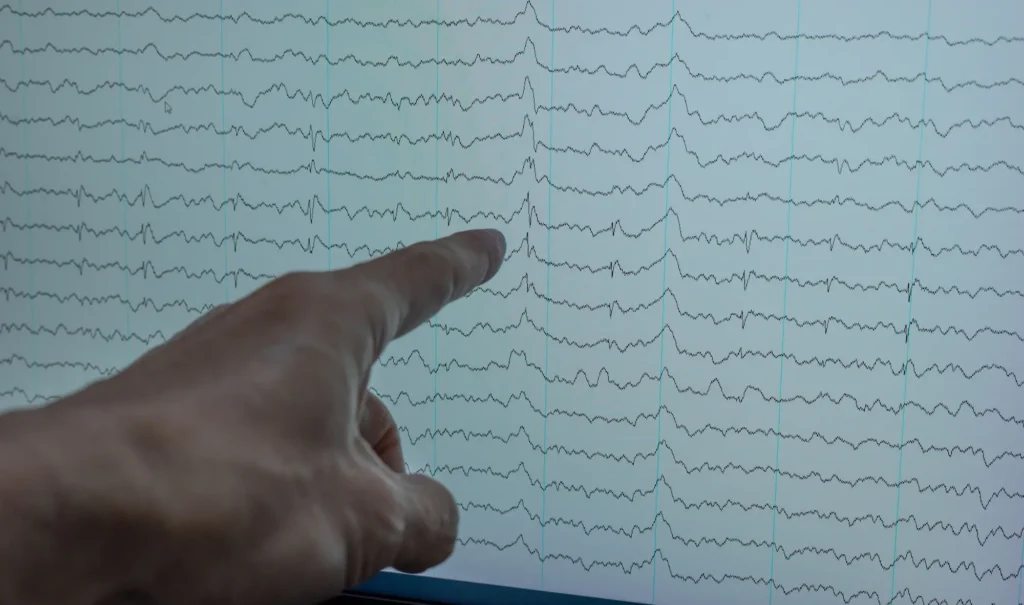
A hand pointing to an EEG monitor displaying the slow spike-and-wave brain pattern that is characteristic of Lennox-Gastaut Syndrome.

The Signature of LGS: The Slow Spike-Wave Pattern

One of the defining characteristics of Lennox-Gastaut Syndrome is a specific pattern found on an electroencephalogram (EEG) known as the "slow spike-and-wave." While a typical EEG shows rapid electrical communication between brain cells, the LGS brain often displays a rhythmic, slower electrical discharge (usually less than 2.5 Hertz).

What does this mean for daily life? These slow-wave discharges occur not just during a seizure, but often while the patient is awake and appearing "stable." This constant background noise in the brain acts like static on a radio, making it difficult for the brain to process information, learn new skills, or retain memories. This is a primary driver of the cognitive impairment seen in LGS. By understanding this electrical signature, researchers are better equipped to develop therapies that don't just stop a physical convulsion, but also help "clear the static" to support better cognitive function.

Debunking Myths: LGS is More Than Just Seizures

There is a common misconception that if you can stop the seizures, you "fix" the LGS. Unfortunately, the reality is more complex. Understanding the truth behind these myths is essential for finding the right care and research opportunities.

  • Myth: Seizure freedom equals cognitive recovery. Fact: While reducing seizure frequency is vital, the underlying encephalopathy (brain dysfunction) of LGS often persists. Modern pediatric epilepsy research is now looking at "neurodevelopmental" outcomes—how we can support brain growth and learning alongside seizure management.
  • Myth: Behavioral issues are just a "side effect" of medication. Fact: While some anti-seizure medications can impact mood, many behavioral health challenges—such as hyperactivity, aggression, or autism-spectrum traits—are actually part of the LGS clinical picture itself.
  • Myth: Once a child reaches adulthood, LGS "levels off." Fact: LGS is a lifelong journey. As the brain ages, the types of seizures and cognitive needs may shift, which is why continued participation in clinical trials across all ages is so important.

The Power of the Natural Environment in Research

Historically, participating in LGS clinical trials required frequent, stressful visits to specialized epilepsy centers. For a patient who may struggle with sensory processing or the anxiety of new environments, these trips can trigger behavioral outbursts or even more frequent drop seizures.

This is where decentralized research is making a massive difference. Through at-home study participation, Science 37 allows families to contribute to medical science from the safety and comfort of their living rooms.

A caregiver gently holding hands with a young boy during an at-home therapy session on a colorful foam mat, supporting the behavioral and physical needs of LGS.

Why the home environment matters for LGS data:

  1. Accurate EEG Monitoring: Portable, wearable EEG technology allows doctors to see the slow spike-wave patterns during a patient's actual daily routine, rather than in a sterile hospital bed.
  2. Real-World Behavior: Caregivers can report on behavioral health and cognitive milestones in real-time using mobile apps, capturing the "good days and bad days" more accurately than a once-a-month office visit allows.
  3. Safety First: For those prone to drop seizures, staying at home eliminates the risks associated with long-distance travel and navigating unfamiliar public spaces.

Improving Quality of Life Through Inclusive Research

The goal of modern LGS clinical trials is no longer just "seizure reduction." We are looking for treatments that help a child stay more alert during the day, improve their ability to communicate their needs, and reduce the behavioral hurdles that make social interaction difficult.

By choosing to participate in a virtual clinical trial, you are helping researchers understand the full spectrum of Lennox-Gastaut Syndrome. You are providing the data needed to create a future where treatments are as diverse as the needs of the LGS community.

Frequently Asked Questions

How do drop seizures affect long-term cognitive health? Drop seizures (atonic seizures) cause a sudden loss of muscle tone. While the seizure itself is brief, the frequent "resets" to the brain's electrical state and the constant risk of head trauma can contribute to further cognitive delays and an increased fear of physical activity.

What behavioral health support is available for LGS families? In addition to medication, many families find success with Applied Behavior Analysis (ABA) therapy, sensory integration, and specialized educational plans. Clinical research is also looking into how non-sedating therapies can help manage irritability without causing further grogginess.

Can my child join a trial if they are non-verbal? Absolutely. In fact, it is vital that non-verbal patients are represented in research. Decentralized trials use caregiver-reported outcomes and objective data from wearable devices to ensure that every patient’s experience is captured, regardless of their ability to speak.

What is the "slow" in slow spike-wave? The "slow" refers to the frequency of the electrical pulses. In LGS, these pulses happen at a rate that interferes with the brain's ability to "keep up" with incoming information, leading to what many describe as a cognitive "fog."

A Partner in Your LGS Journey

At Science 37, we believe that research should fit your life—not the other way around. Managing Lennox-Gastaut Syndrome is a full-time job, and your contribution to science shouldn't make that job harder. By bringing the trial to you, we ensure that the most vulnerable patients have a seat at the table in developing the next generation of epilepsy care.

If you are ready to explore a different kind of research experience—one that values the cognitive and behavioral health of your loved one as much as you do—view our current LGS study opportunities today.


hello world!

Read More

A young girl smiling brightly at her caregiver in a comfortable home setting, representing the improved quality of life and comfort that at-home LGS clinical trials aim to support.
Beyond the Seizures: Managing the Cognitive and Behavioral Impact of Lennox-Gastaut Syndrome
For many families living with Lennox-Gastaut Syndrome (LGS), the daily focus is often—understandably—on seizure control. When you are managing multiple types of seizures, including dangerous drop seizures that can lead to injury, the physical safety of your loved one is the immediate priority. However, LGS is a multifaceted condition that extends far beyond the electrical […]
Read More
A mother sitting on a couch gently embracing her infant, reflecting the dedicated caregiver support required for families managing Dravet syndrome.
The Evolution of Dravet Syndrome Care: New Frontiers in Rare Epilepsy Research
For families living with Dravet syndrome, the journey often begins with a terrifying milestone: a prolonged, fever-related seizure in the first year of life. What starts as a frightening "first" quickly evolves into a complex, lifelong management of treatment resistant epilepsy. However, we are entering a transformative era in rare epilepsy research. We are moving […]
Read More
Doctor holding a white pill and an injection pen to compare oral versus injectable medication options.
Pills vs. Pens: The Changing Landscape of GLP-1 Treatments
If you have followed health news recently, you have undoubtedly heard about the "weight loss revolution" driven by medications like Ozempic, Wegovy, and Zepbound. These drugs, known as GLP-1 receptor agonists, have changed the game for type 2 diabetes management and long term weight management. However, for many patients, there is a significant hurdle: the […]
Read More
1 2 3 30
© 2026 Science 37 | All Rights Reserved