

Your skin is your largest organ and the first line of defense. It shields you from environmental toxins, pathogens, UV rays, and temperature extremes. But in the summer, that protective barrier faces serious stress.
Rising heat, longer daylight hours, and increased UV exposure can disrupt the skin’s microbiome and immune balance. If you’re already living with chronic skin conditions like psoriasis and eczema, that shift can be brutal. Suddenly, flare-ups become more frequent. Itching intensifies. Redness spreads. And something as simple as a walk outside or a day at the park can trigger a full-blown reaction.
Of course, there are treatment options to help remedy this, but not every treatment works for every person. Many current therapies lose effectiveness over time or come with side effects that make them difficult to maintain in the long term.
That’s why researchers are exploring new approaches to managing summer-triggered skin conditions. In this blog, we’ll explore some current psoriasis and eczema research studies and how you can get involved right from where you are.
Psoriasis and eczema are two of the most common chronic skin conditions—and while they may look similar on the surface, they have different triggers and underlying causes.
Psoriasis is an immune system condition that causes an accelerated growth of skin cells. This leads to thick, red patches covered with silvery-white scales. These patches often appear on the elbows, knees, scalp, or lower back but can appear anywhere.
In the summer, sun exposure and heat can sometimes help alleviate mild psoriasis, but for many people, too much sun, or even a sunburn, can exacerbate the condition. Sweat, chlorine from pools, and air-conditioned environments that dry out the skin can also lead to flare-ups.
Eczema, or atopic dermatitis, is primarily characterized by a weakened skin barrier and a hypersensitive immune response. It causes intense itching, dry skin, redness, and inflammation, especially in skin folds or on the face, neck, and hands.
People with eczema often find that humidity, sweat, certain sunscreen ingredients, or allergens like pollen exacerbate their symptoms. It’s also a challenge to manage stress in the heat of summer. And that affects the skin health as well.
Summer-related factors can exacerbate both conditions, and when the largest organ in your body is constantly irritated or inflamed, it affects your confidence, comfort, and overall well-being.
That’s why researchers are working harder than ever to study how these conditions react to seasonal triggers, and how to provide lasting relief through eczema and psoriasis clinical trials.
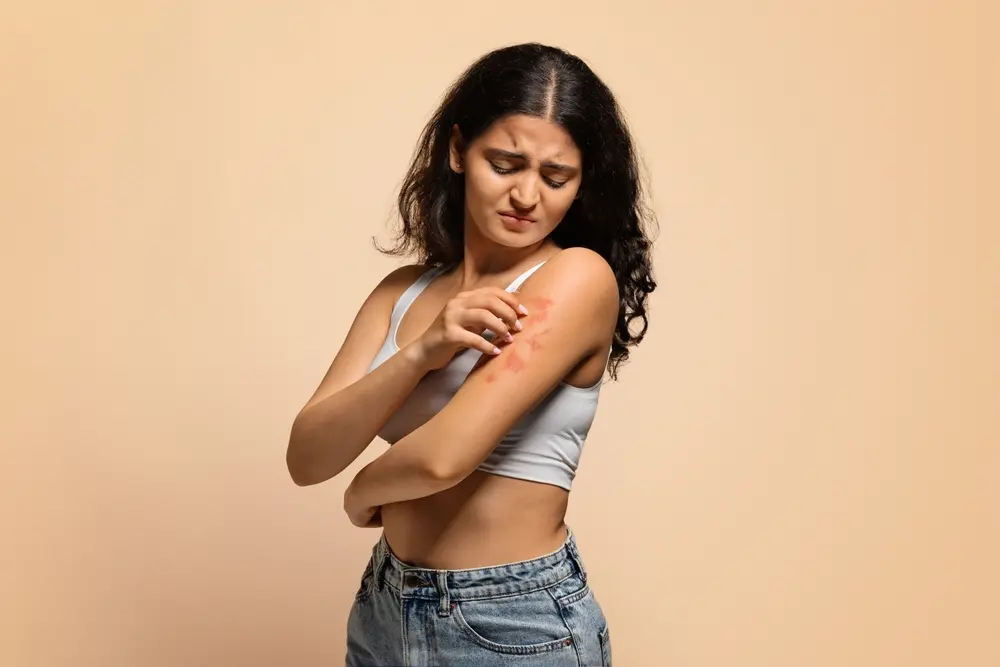
If you’ve ever felt like your treatment options are limited or that nothing seems to fully ease your symptoms, you’re not alone. That’s exactly why clinical trials are so critical in dermatology. They help uncover new ways to manage chronic skin conditions like psoriasis, eczema, and even sun-triggered flare-ups by testing innovative therapies and refining what’s already available.

In these trials, researchers evaluate new medications, advanced therapies, and lifestyle interventions to determine what works best, both in the short term and long term. Every breakthrough in dermatology, whether it’s a topical cream, injectable biologic, or light-based treatment, has started in a clinical trial.
For psoriasis, many ongoing studies focus on biologics, highly targeted medications that calm specific parts of the immune system responsible for triggering inflammation and rapid skin cell growth. These treatments are already improving the quality of life for many patients, and newer versions under study may work faster, last longer, and cause fewer side effects.
When it comes to eczema, research is honing in on therapies that restore the skin barrier, reduce inflammation, and prevent skin infections. Trials are exploring a range of treatments, including topical medications, oral therapies, probiotics, and immune-modulating agents, which offer relief from itching, dry skin, and flare-ups, particularly in individuals with erythrodermic psoriasis or eczema whose symptoms tend to worsen during the summer.
Another promising area of focus is light therapy, also known as phototherapy. This technique uses carefully controlled doses of UV light to reduce inflammation and slow the abnormal skin cell turnover seen in conditions like guttate psoriasis and atopic dermatitis. While already in use, current trials are working to optimize treatment frequency, improve delivery methods, and understand how light therapy interacts with different blood vessels, skin types, and immune responses.
Clinical trials are also a key part of prevention. Right now, researchers are conducting studies to better understand skin cancer risks, especially as sun exposure continues to rise during warmer months. These studies look at how UV light damages skin on a cellular level, how sun protection strategies can be improved, and how certain skin types or immune profiles may be more vulnerable to sun damage and melanoma.
Many of these studies also explore how stress and environmental factors contribute to the development or worsening of skin conditions. As we learn more about the role of the immune system, inflammation, and even the gut-skin connection, researchers are developing more personalized treatments tailored to each individual’s biology and lifestyle.
And with platforms like Science 37, it’s never been easier to get involved. Our at-home clinical trials allow you to participate in meaningful research from wherever you are, no constant clinic visits, no waiting rooms, and no travel required. It’s a powerful way to contribute to the future of dermatology while possibly finding a treatment that works better for you.

If you’ve been dealing with flare-ups that ruin your summer plans, or trying treatment after treatment with no lasting relief, it might be time to take a different approach. Not just another cream. Not another wait-and-see. But something forward-moving, something that lets you take part in what’s next for skin health.
And with our at-home clinical trials, you shouldn’t have to struggle to do that.
These trials are designed around real life; your schedule, your home, and your experience. You don’t need to commute across town or take time off work. You simply need to be willing to show up for your skin in a new way and share your experience with researchers who are listening.
Whether you’re managing psoriasis, navigating eczema, or searching for solutions for sun-triggered skin conditions, your voice and your skin deserve to be part of the progress.
Join a Science 37 trial today and help bring smarter, more effective treatments to the people who need them most, starting with you. Start your trial journey now with Science 37.